Saltar al contenido principal.

The Platform That Modernized CFE's Electronic Procurement Processes 

C&A Systems developed and implemented CFE's procurement platform, modernizing and digitalizing the entire sourcing, contracting, and supplier management lifecycle.

img-CFE-1
Success Story | Digital Procurement Platform ```

Digital Procurement Platform: A Digital Transformation Case Study in the Energy Sector

How an enterprise digital procurement platform helped streamline procurement processes, strengthen traceability, improve document management, and support operational efficiency.

A technology solution designed to centralize procurement information, digitize critical procedures, and support supplier interaction within a large-scale organization.
Talk to a Specialist

Digital transformation has become a strategic priority for organizations that need to optimize complex processes, improve user experiences, and strengthen information governance.

In procurement environments, organizations often manage multiple departments, suppliers, documents, administrative activities, and decision points. Without a centralized digital platform, maintaining visibility, traceability, and timely access to information can become increasingly difficult.

This digital transformation case study shows how C&A Systems participated in the design and implementation of a specialized digital procurement platform that helped modernize procedure management, centralize information, support document management, and improve collaboration among stakeholders.

```

Executive Summary

Aspect Description
Industry Energy
Project type Digital Transformation
Solution focus Digital procurement platform
Objective Modernize procurement process management
Scope Centralization and digitization of procedures
Key capabilities Procurement traceability, document management, supplier interaction, and process visibility
Business value Operational efficiency improvement and stronger information control
```

Why Digital Procurement Matters for Large Organizations

Procurement processes play a critical role in large organizations. They involve information management, document exchange, supplier participation, internal coordination, and multiple stages that require visibility and control.

When these processes depend on disconnected tools, manual tracking, or fragmented documentation, organizations may face challenges related to transparency, process traceability, information access, and operational efficiency.

A digital procurement platform helps organizations centralize procurement-related information, standardize activities, simplify document management, and support better communication among stakeholders. This makes enterprise process digitization an important step for organizations seeking to modernize critical operations.

```

What Is a Digital Procurement Platform?

A digital procurement platform is a centralized environment designed to support procurement-related activities, documentation, workflows, participant interaction, and operational tracking.

These platforms help organizations improve visibility across procurement processes, strengthen information governance, and simplify the administration of complex procedures. They can also support supplier management by providing structured access to documentation, support resources, and process information.

For large-scale organizations, a digital procurement platform is not only a technology tool; it is a foundation for process visibility, traceability, document control, and long-term operational improvement.
```

The Challenge

Managing procurement procedures requires the coordination of multiple activities, documents, participants, and information flows. As the volume of information and process complexity increases, so do the challenges related to tracking, control, and access to information.

The organization needed to modernize its processes through a solution capable of centralizing information, strengthening procurement traceability, improving document management, and simplifying operational administration.

Centralize procurement procedure management.
Improve information visibility.
Strengthen procurement traceability.
Optimize document management.
Simplify process tracking.
Improve the supplier and participant experience.
Support operational efficiency improvement.
Modernize processes through digital tools.
```

Common Procurement Challenges in Large Organizations

Organizations with complex procurement processes often face operational challenges that go beyond technology. These challenges usually involve process design, information governance, document availability, stakeholder coordination, and visibility.

Fragmented information

Procurement information may be distributed across different systems, documents, repositories, or communication channels, making it difficult to maintain a complete view of each procedure.

Manual process tracking

When activities are tracked manually, organizations may face delays, duplicated work, and limited visibility into the current status of each procedure.

Document management complexity

Large volumes of documents require structured access, organization, and long-term management to support consultation, review, and operational continuity.

Limited procurement traceability

Without structured traceability, it becomes harder to review activities, understand process history, and support accountability across procurement operations.

```

Key Challenges Identified

Managing large volumes of information

Procedures generate significant amounts of documentation and activities that require continuous tracking and structured information access.

Process traceability

It was essential to have mechanisms that made it possible to identify and consult the history of activities related to each procedure.

Operational standardization

The organization needed to consolidate criteria and workflows that would simplify process administration.

Visibility and control

The organization required a more structured view of information to support decision-making and operational tracking.

```

Project Objectives

Centralize information

Provide a single platform to manage procurement procedures and related documentation.

Optimize processes

Reduce manual activities and support procurement process automation.

Improve the user experience

Facilitate access to relevant information and improve interaction for users and participants.

Increase traceability

Strengthen activity tracking, process visibility, and information control.

Drive digital transformation

Modernize processes through technology tools aligned with the organization’s operational needs.

```

Transforma tu Mesa de Ayuda con GLPI 

GLPI

GLPI Mesa de ayuda inteligente

The Digital Procurement Platform

C&A Systems participated in the implementation of a digital solution designed to manage procurement processes centrally, enabling the administration of information, documentation, and activities associated with each procedure.

The platform was conceived to simplify daily operations, improve information control, support procurement process automation, and provide a more efficient experience for the users and participants involved.

Centralized procurement procedure administration.
Document management.
Activity tracking.
Information consultation.
Record control.
Automation of administrative tasks.
Report generation.
Operational monitoring and tracking.
```

Why Procurement Process Automation Matters

Procurement process automation helps organizations reduce repetitive administrative activities, standardize workflows, and improve access to information throughout the lifecycle of a procedure.

By digitizing key procurement activities, organizations can improve consistency, reduce dependency on manual tracking, and simplify operational management. This approach is especially important in large organizations where multiple stakeholders interact with documentation, approvals, communications, and process milestones.

Procurement automation is not only about accelerating tasks; it helps create a more structured, traceable, and scalable operating model.
```

Solution Architecture

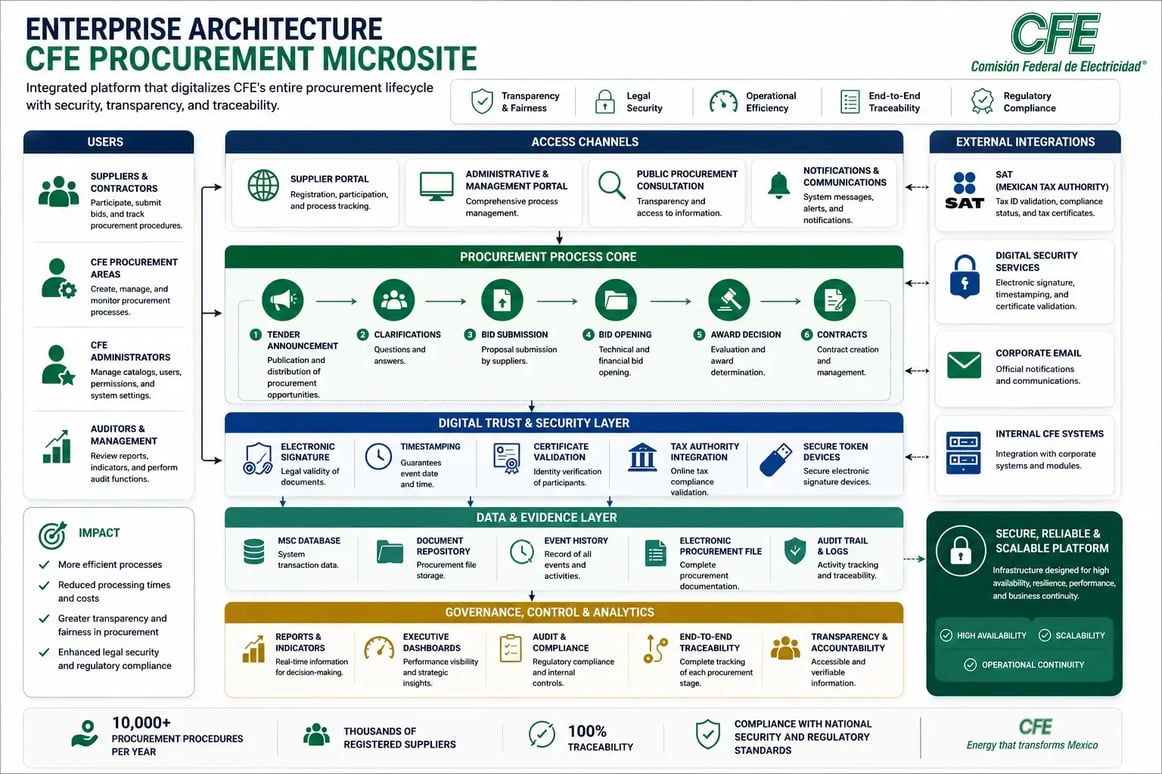
The platform was designed around principles of scalability, availability, security, maintainability, integration, and sustainable growth.

These principles made it possible to build a solution prepared to evolve as the organization’s operational needs change, while supporting enterprise process digitization and structured information management.
CFE english

Figure 1. Reference enterprise architecture of the digital procurement platform implemented to centralize processes, documentation, and operational traceability.

```

Enterprise Process Digitization

One of the main achievements of the project was transforming traditionally manual processes into structured digital workflows.

This made it possible to improve information organization, facilitate document consultation, increase activity visibility, strengthen tracking mechanisms, and optimize operational administration.

Process standardization.
Reduced administrative friction.
Greater access to information.
Operational visibility.
Activity tracking.
Control and auditability.
```

Procurement Traceability and Information Control

Procurement traceability enables organizations to monitor activities, documentation, and events throughout the lifecycle of a procedure.

Improved traceability supports accountability, transparency, and information governance. It also helps organizations understand how processes evolve over time, identify operational bottlenecks, and maintain a structured record of relevant activities.

Activity visibility

Structured traceability helps stakeholders understand the status and evolution of each procedure.

Information governance

Traceability supports better control over records, documents, and activities associated with procurement processes.

Operational continuity

Centralized process history makes it easier to consult previous activity and support ongoing operational management.

```

Document Management Platform Capabilities

Effective document management is essential for organizations that handle large volumes of information across complex processes.

A document management platform helps centralize information, simplify access to documentation, support long-term record management, and maintain better organization across operational activities.

Centralized document access.
Improved information organization.
Support for document consultation.
Better record management.
Improved operational continuity.
Stronger process visibility.
```

Supplier Management and Digital Experience

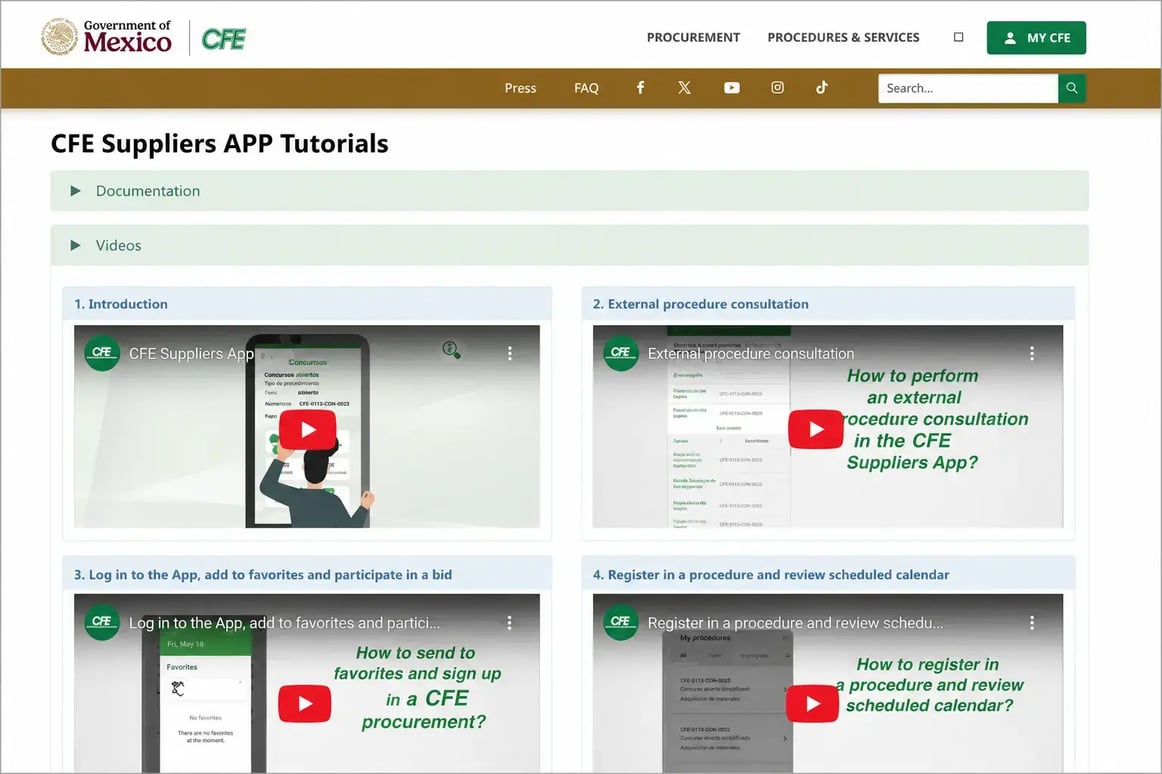
Digital platforms can also improve the supplier experience by providing access to documentation, support resources, training materials, and centralized communication channels.

For organizations with multiple participants and complex procedures, a supplier management platform can help reduce confusion, improve access to information, and support a more consistent interaction model.
CFE 2

Figure 2. Training portal designed to support participant onboarding through tutorials, documentation, and self-service resources.

```

Operational Support and Assistance

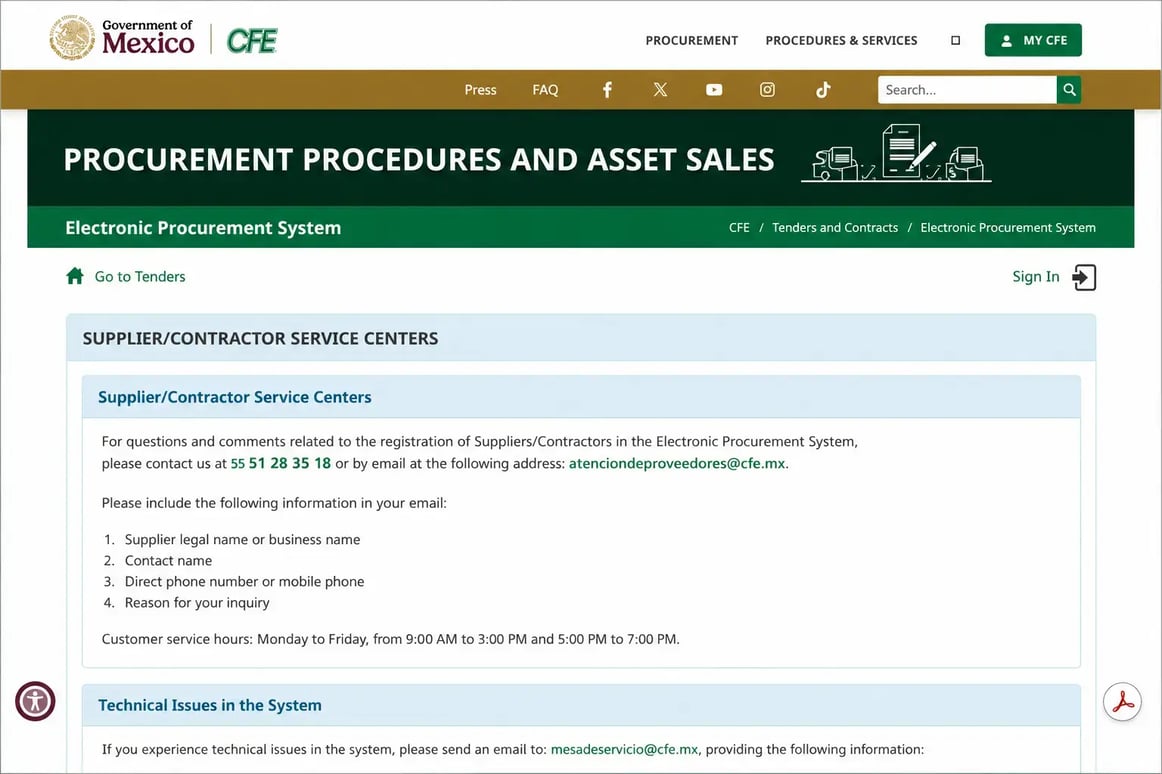
Digital transformation also requires mechanisms that support users throughout their interaction with the platform.

For this reason, assistance spaces were incorporated to help resolve questions, facilitate communication, and improve the overall experience for participants.
ChatGPT Image 9 jun 2026, 11_55_05

Figure 3. Support and assistance mechanisms designed to facilitate participant interaction and guidance.

```

Governance, Transparency, and Process Visibility

Transparency and governance are increasingly important in procurement environments. Organizations need structured processes that allow participants to access relevant information while maintaining control over documentation and activities.

A digital procurement platform helps maintain process visibility, strengthen information control, and support a more organized operating model without exposing sensitive operational details.

Governance in digital procurement is built through visibility, traceability, document control, and consistent process administration.
```


Operational Efficiency Improvement and Business Benefits

The digital procurement platform helped support a more structured operating model by centralizing information, improving access to documents, strengthening traceability, and simplifying process administration.

Greater operational efficiency

Digitization helped optimize administrative activities and improve procurement process management.

Improved access to information

Centralization simplified the consultation and administration of documents and records.

Increased procurement traceability

The platform provides a structured view of activities related to each procedure.

Stronger operational control

The organization gained greater visibility into the information and processes managed.

Better document organization

Centralized document management helped improve access, consultation, and process continuity.

Technology foundation for future growth

The solution was designed to evolve as business and operational needs change.

```

Business Value Delivered

Beyond process digitization, the project helped establish a solid technology foundation to continue driving digital transformation initiatives.

The implementation contributed to modernizing processes, improving information management, increasing operational efficiency, strengthening control mechanisms, and enabling future technology evolution.

For organizations managing complex procurement environments, this type of digital transformation supports a more scalable, traceable, and organized operating model without requiring the publication of sensitive operational details.

```

Common Challenges Faced by Organizations with Similar Processes

Many organizations face similar challenges when managing complex procurement processes, especially when multiple departments, documents, suppliers, and participants are involved.

Information scattered across multiple systems.
Dependence on manual processes.
Difficulty consulting historical documentation.
Lack of procurement traceability.
Administrative delays.
Low operational visibility.
Poorly standardized processes.
Limited supplier communication channels.
```

Lessons Learned

Technology alone does not guarantee the success of a digital transformation initiative.

The best results are achieved when the technology solution aligns with business processes, user needs, information governance requirements, and the organization’s strategic objectives.

In procurement environments, digitization should not be approached only as a system implementation. It should also consider process clarity, document organization, supplier experience, traceability, and long-term scalability.

Understand processes before digitizing them.
Prioritize the user and supplier experience.
Design scalable solutions.
Centralize information to improve decision-making.
Consider future evolution from the early stages of the project.
Treat traceability as a strategic capability, not only a technical feature.

Recommendations for Organizations Looking to Digitize Procurement Processes

Organizations seeking to modernize procurement processes should evaluate both technology and process maturity before implementing a new platform.

A successful digital procurement initiative requires clear objectives, structured information management, user adoption planning, and a scalable operating model.

Analyze current processes

Identify activities that create the greatest operational workload and document management complexity.

Define clear objectives

Establish success criteria before selecting or implementing a digital procurement platform.

Prioritize the user experience

Facilitate platform adoption by designing clear navigation, support resources, and accessible information.

Design for growth

Implement solutions capable of evolving as the organization’s procurement needs change.

Invest in traceability

Procurement traceability is essential for improving visibility, accountability, and process control.

Strengthen document management

Centralized documentation supports consultation, organization, continuity, and long-term information governance.

```

Conclusion

The implementation of this solution demonstrates how digital transformation can become a strategic enabler for organizations seeking to optimize complex procurement processes, improve information management, and strengthen operational efficiency.

Through a centralized digital procurement platform, it was possible to modernize processes, increase traceability, support document management, and build a technology foundation prepared for future challenges and opportunities.

This digital transformation case study shows how enterprise process digitization can support more structured, traceable, and scalable procurement operations.
```

Is your organization still managing suppliers through emails, spreadsheets, and multiple platforms? 


The development of CFE's Digital Supplier Management and Service Microsite enabled the centralization of processes, automation of information workflows, and improved interaction with users and external stakeholders.

At C&A Systems, we helped transform this operation through an Intelligent Supplier Management Platform, delivering greater efficiency, visibility, and control across the supplier lifecycle.

Learn how we can help

Frequently Asked Questions about Digital Procurement Platforms


What is a digital procurement platform?

A digital procurement platform is a centralized environment designed to manage procurement-related activities, documentation, workflows, participant interactions, and operational tracking.

What are the benefits of procurement process automation?

Procurement process automation helps reduce repetitive administrative tasks, standardize workflows, improve access to information, and support more efficient operational management.

How does procurement traceability improve process control?

Procurement traceability allows organizations to monitor activities, documentation, and events throughout the lifecycle of a procedure, supporting accountability and information governance.

Why is document management important in procurement?

Document management is important because procurement processes often involve large volumes of information that must be organized, consulted, and managed over time.

How can a supplier management platform improve the participant experience?

A supplier management platform can provide structured access to documentation, training materials, communication channels, and support resources, helping simplify supplier interaction.

What is enterprise process digitization?

Enterprise process digitization is the transformation of manual or fragmented business processes into structured digital workflows that improve visibility, consistency, and operational control.

How does digital transformation improve operational efficiency?

Digital transformation can improve operational efficiency by centralizing information, reducing manual activities, improving access to documentation, and making processes easier to track.

What should organizations consider before implementing a digital procurement platform?

Organizations should analyze current processes, define clear objectives, evaluate document management needs, prioritize user experience, and design for future scalability.

What types of organizations can benefit from procurement digitization?

Organizations that manage complex procurement procedures, large volumes of documentation, multiple stakeholders, or supplier interactions can benefit from procurement digitization.